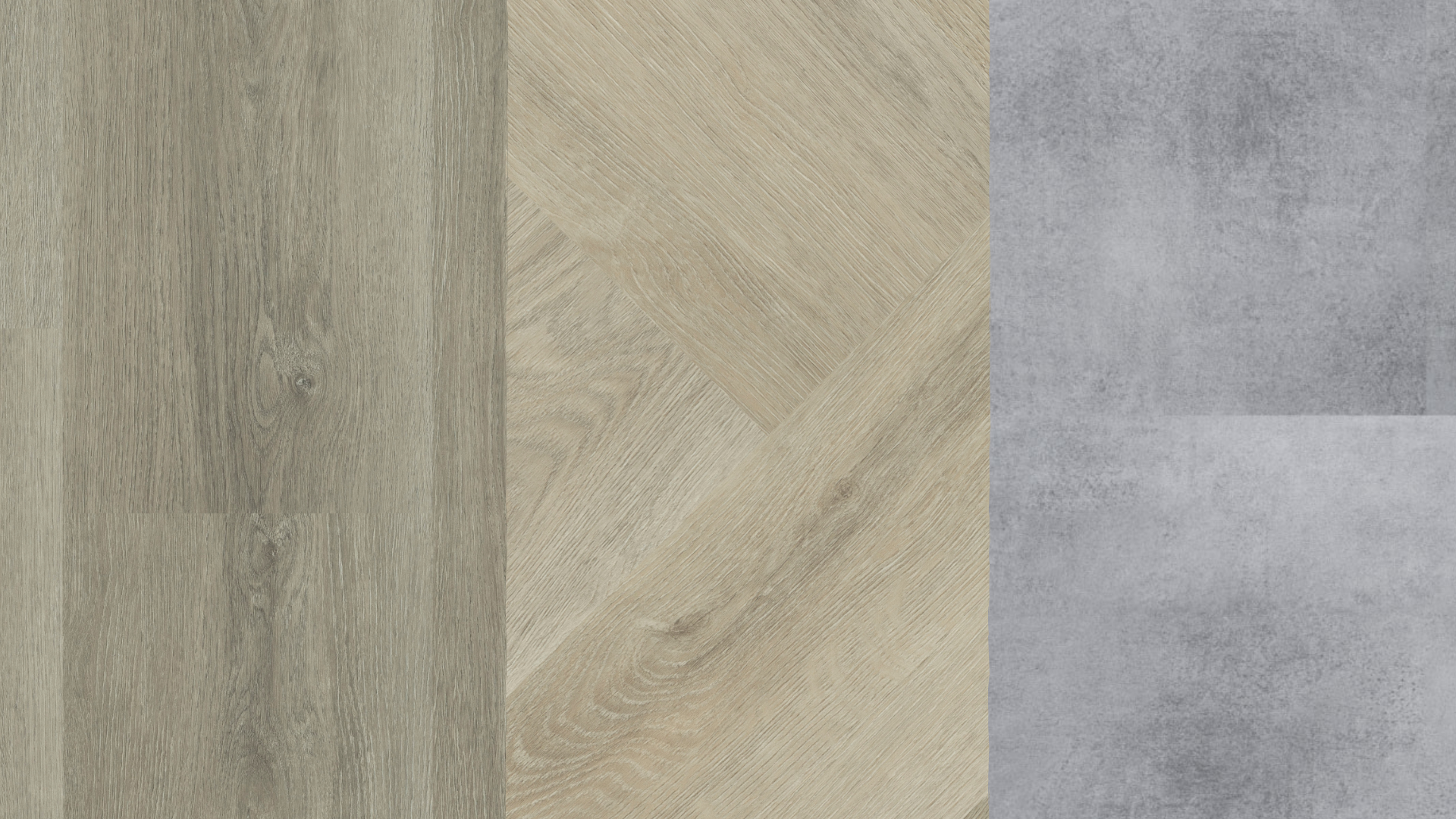


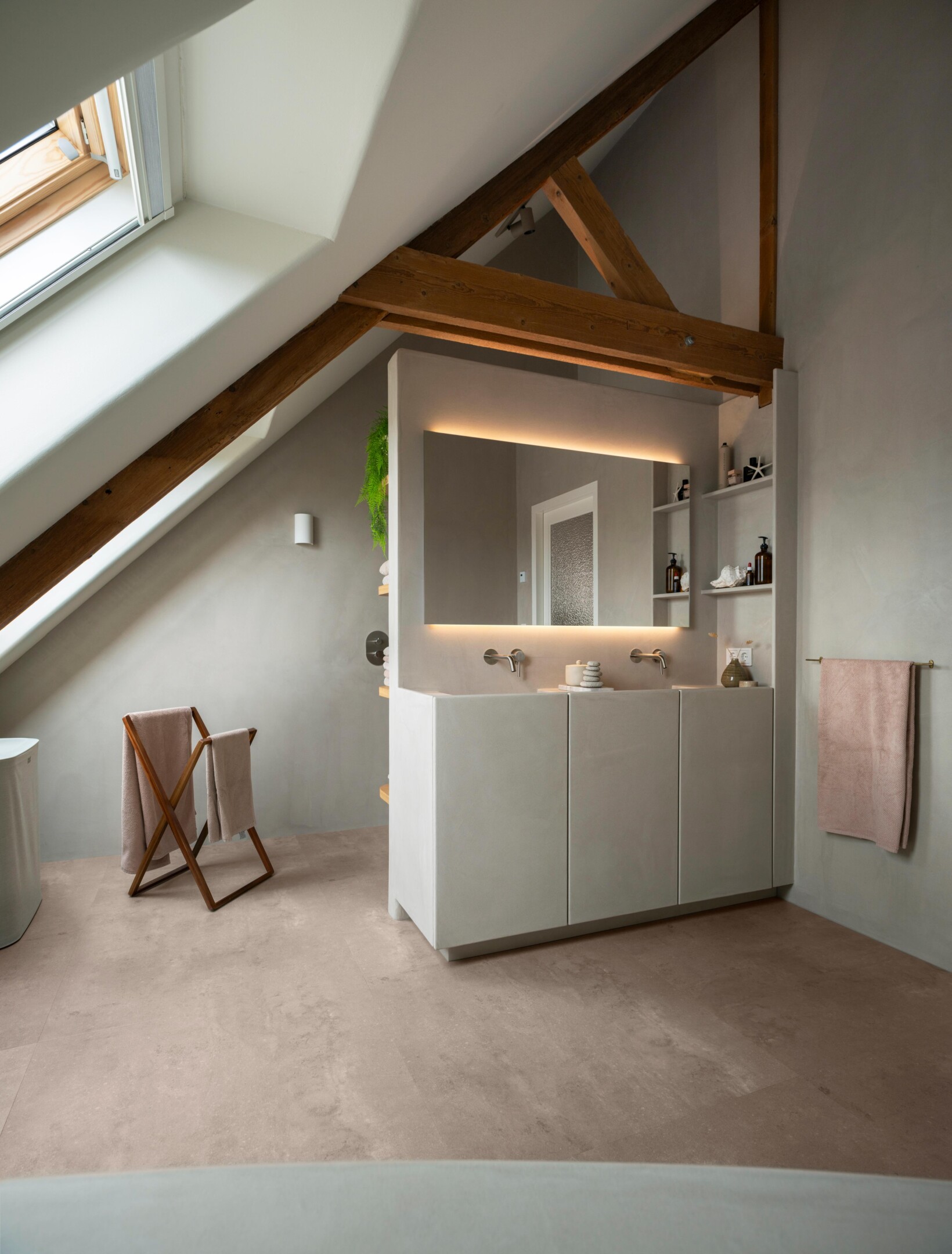
When LVT is suitable for bathrooms
In many bathrooms, LVT performs surprisingly well. The floor is naturally water-resistant and hardly moves, which helps it stay flat and prevents warping when moisture is present.
In a bathroom where the floor mainly gets damp from condensation, splashes, or wet feet, LVT remains stable and retains its color. The matte top layer softly diffuses light, giving the bathroom a calmer, more inviting feel.
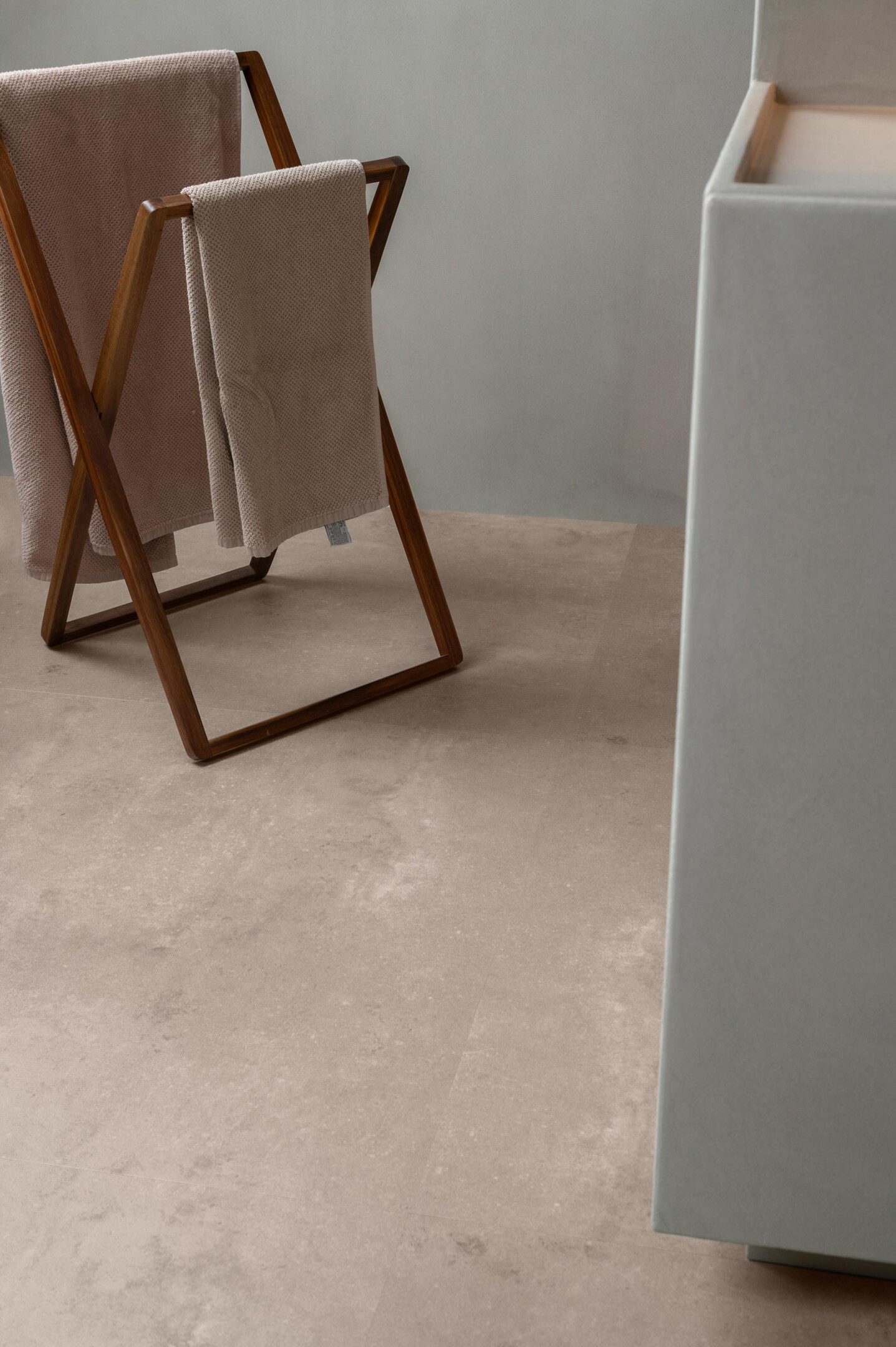
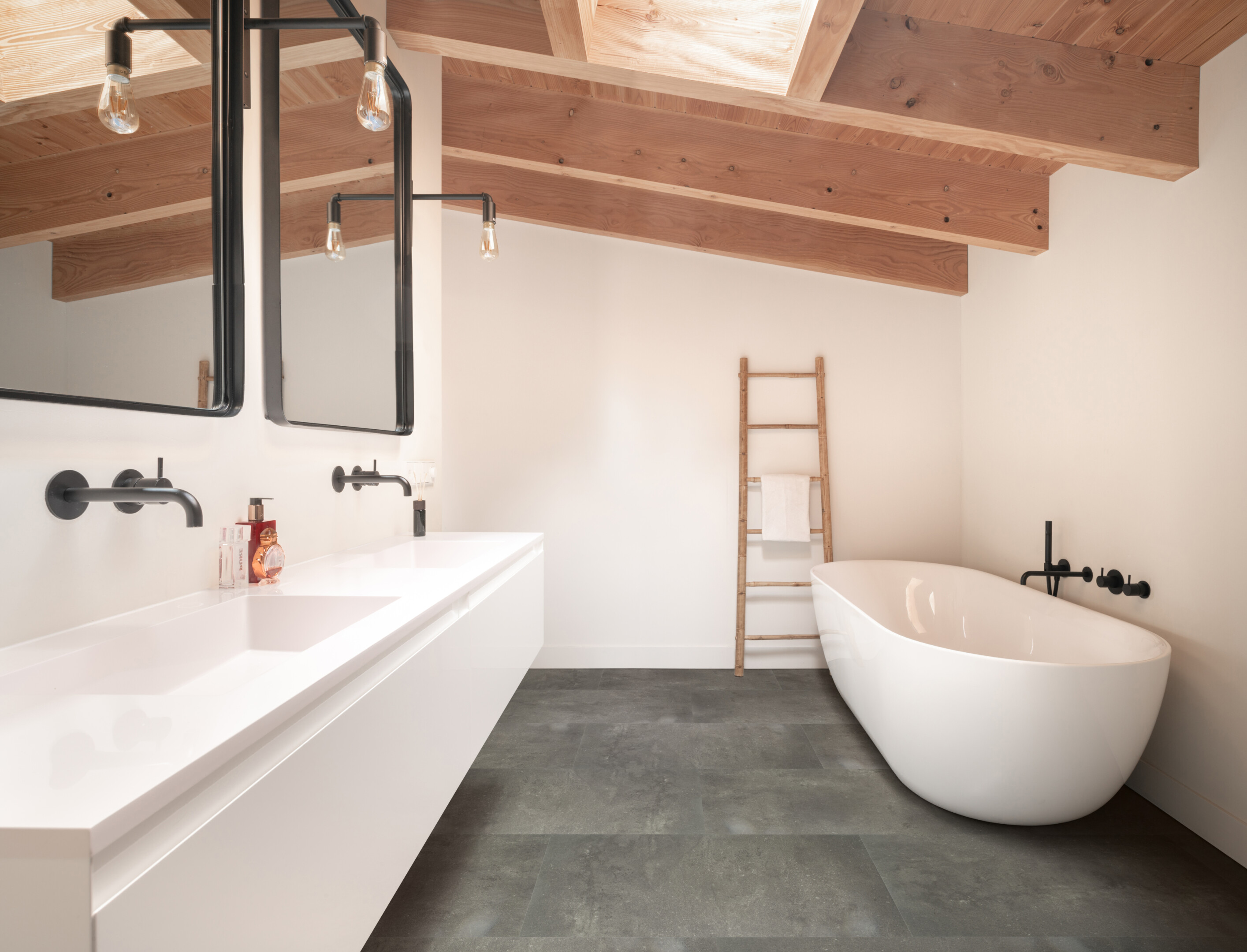
The transition between wet areas and dry areas
The most important question isn’t whether LVT can handle water, but how much water remains in one spot. In an area where you shower daily, water tends to sit for longer periods. That’s when LVT reaches its limits. In a direct shower area or built-in shower, LVT is therefore less suitable.
In the rest of the bathroom, LVT actually performs very well. Think of the space around the tub, around the sinks, near cabinets, or in the main walkways. In places where water doesn’t remain standing for long, the floor stays stable and looking great. This gives the bathroom a warm, inviting feel without the cold hardness of tiles.
Click or dryback: What works better with moisture?
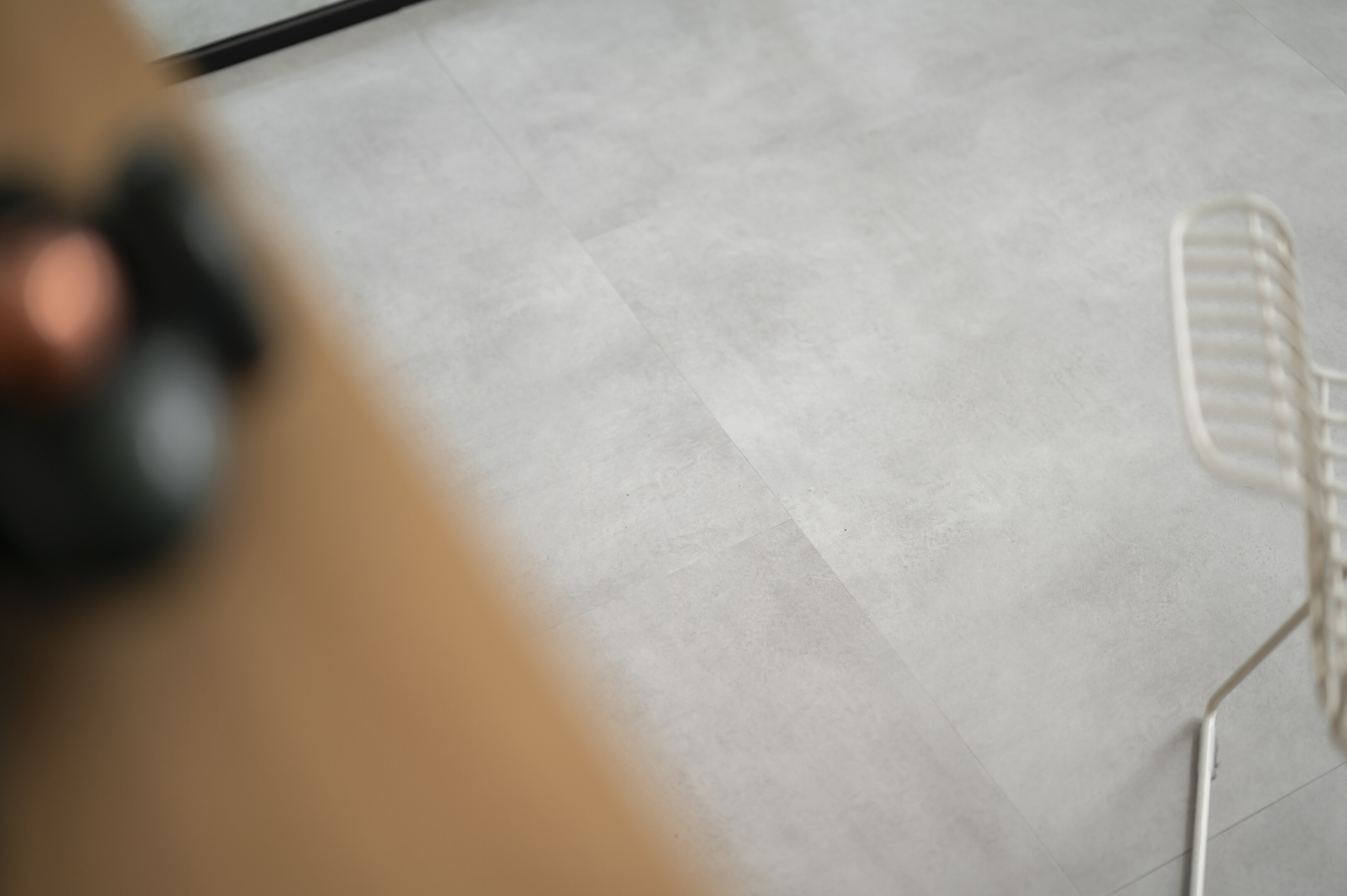
Click LVT can work perfectly fine in a bathroom, but it requires a smooth subfloor and careful installation. The click joints need to fit tightly so no moisture can seep in between the edges. This keeps the floor stable and clean-looking.
Dryback LVT is glued down, creating an even stronger bond. In humid or wet areas, this provides extra peace of mind. Because the floor is fully adhered, the chances of movement or lifted edges are much smaller. For bathrooms that see frequent use of hot water and steam, dryback is often the most reliable option.
Advantages compared to tiles
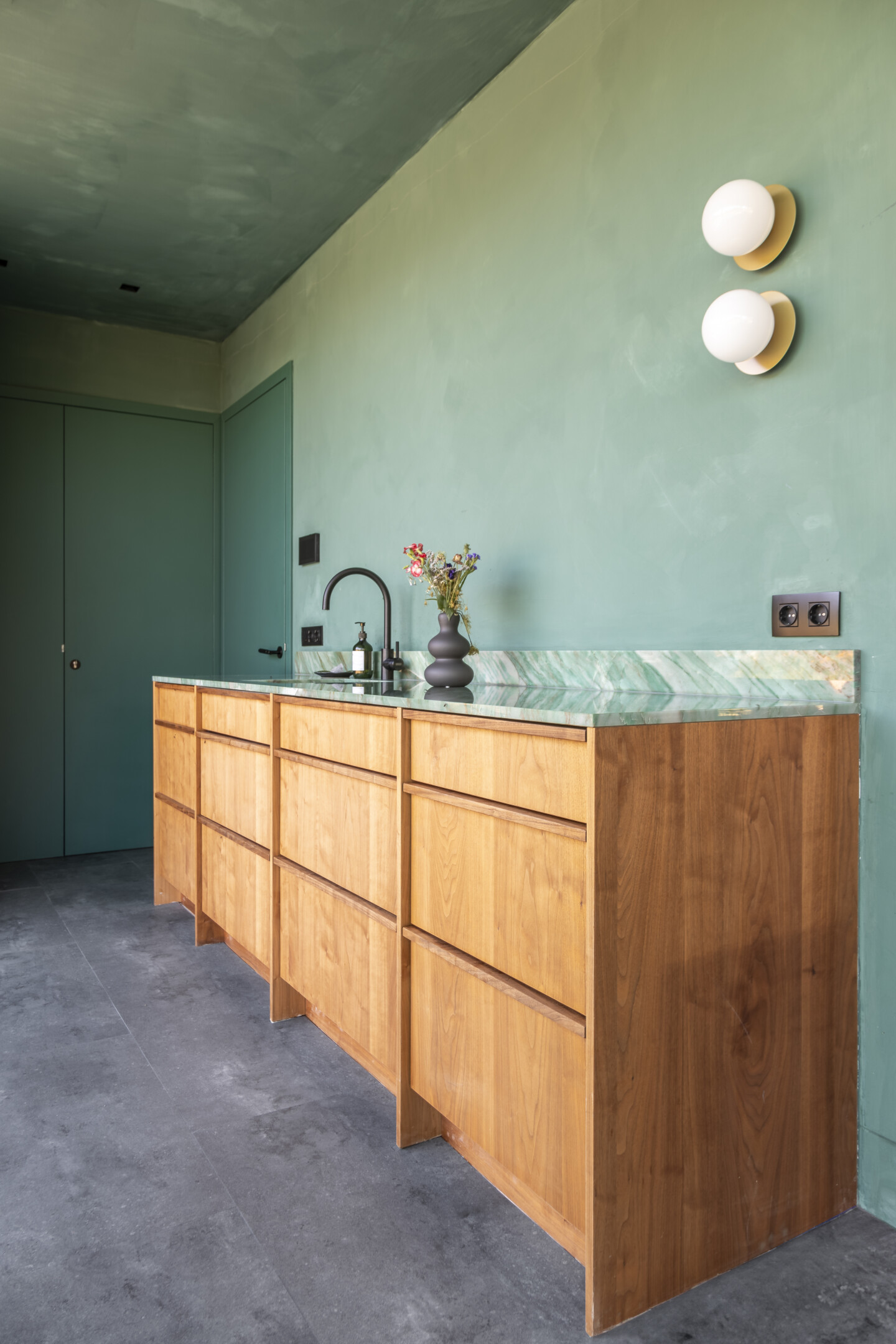
When you see LVT in a bathroom, the atmosphere immediately stands out. The floor feels warm and soft, even without underfloor heating. You hear less echo and less tapping as you walk. The space gains a calm acoustic that you don’t get as easily with tiles. Visually, LVT also works differently. Its matte texture distributes light evenly, making the bathroom feel less cold and hard.
The walking comfort also makes a difference during busy mornings. The floor feels pleasant under bare feet and warms up quickly when the room fills with warm air.
Things to consider for a safe and durable installation
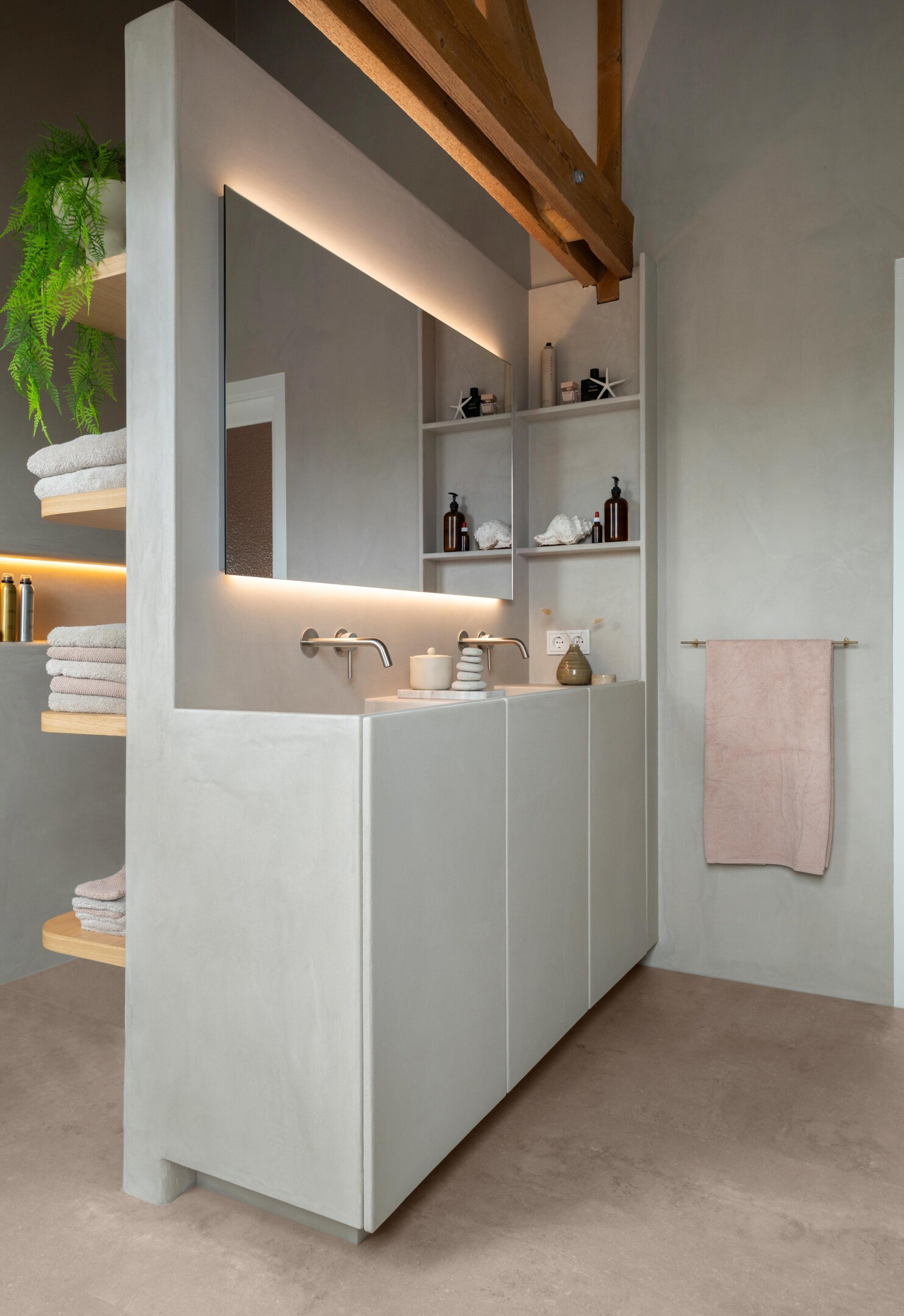
A good bathroom starts with a solid foundation. Ventilation is essential:
- When moisture can dissipate quickly, the floor stays in better condition.
- Pay attention to finishing around gaps, corners, and edges.
- A neat sealant line prevents water from seeping between the floor and the wall.
Combined with a stable subfloor, LVT remains beautiful for years, even with daily exposure to heat and moisture.
Persoonlijk advies voor jouw badkamer?
Every bathroom has different conditions. One space has a lot of steam, another has little ventilation. One gets wet feet daily, while another stays mostly dry.