


Option 1: Dark kitchen with a light floor
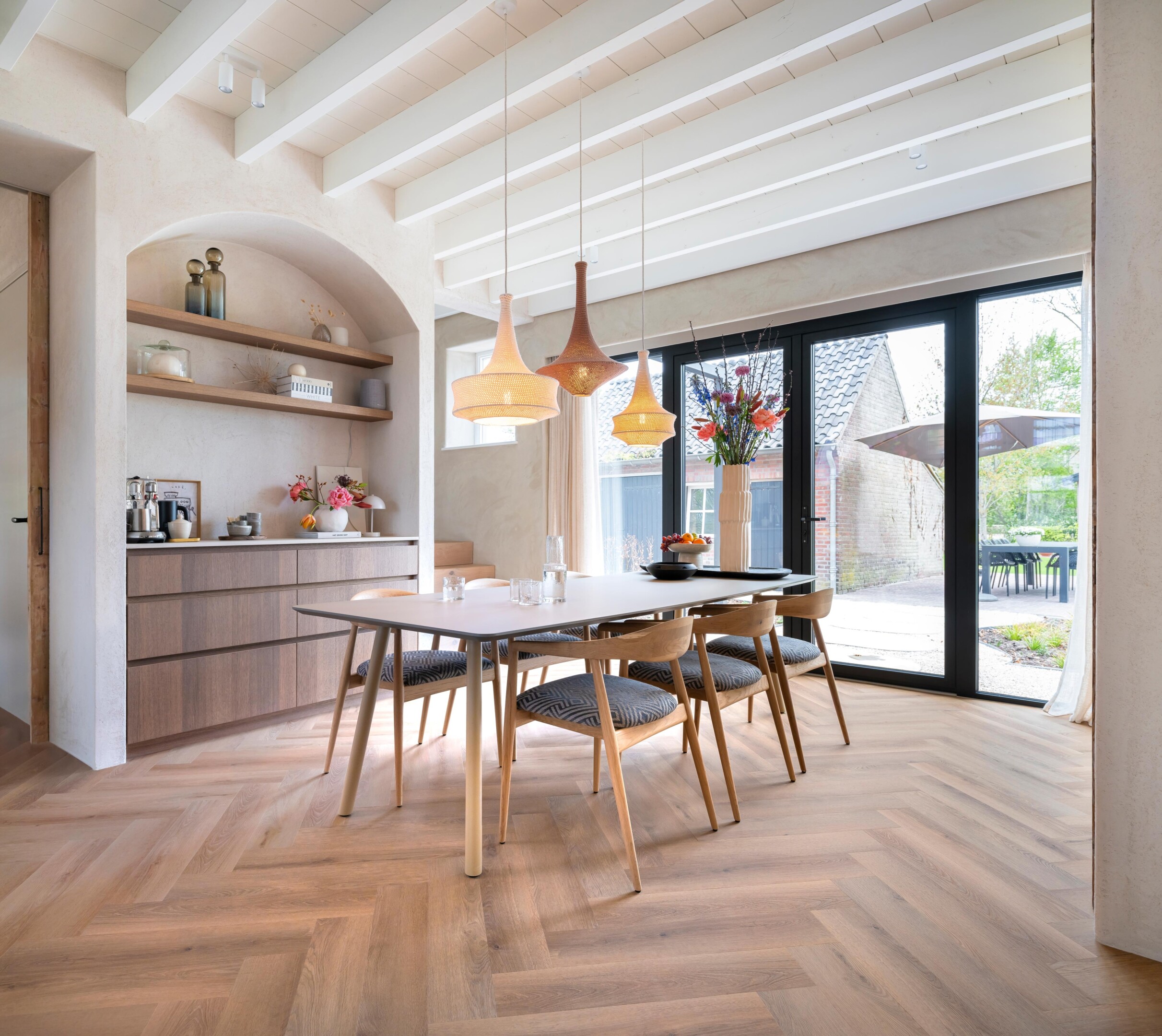
When a dark kitchen is paired with a light floor, it immediately creates airiness and contrast. The space feels more open. The dark cabinets stand out more, and the kitchen unit appears to lift visually from the floor.
This works particularly well in kitchens with limited natural light. The light floor draws light further into the space and adds depth to the kitchen’s darker tones. A light beige wood-look adds warmth and friendliness, while a soft concrete-look provides a modern, calm foundation.
Option 2: Dark kitchen with a dark floor
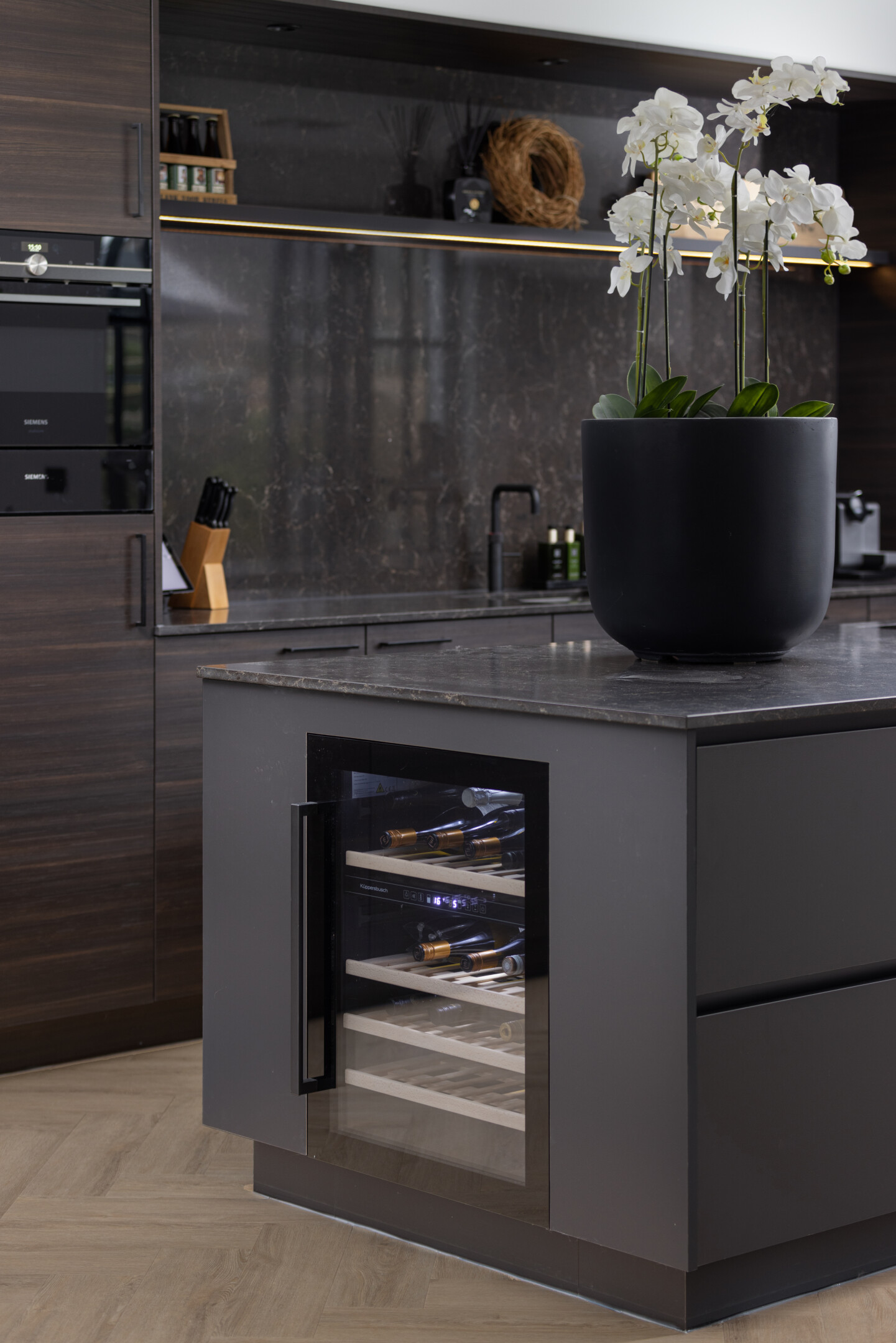
This combination works when you’re aiming for a luxurious, hotel-like atmosphere. Light is distributed more softly and deeply throughout the space. The kitchen forms a strong, cohesive block that exudes calm. In larger kitchens, the effect is immediately noticeable. The space takes on a serene, almost understated feel.
It’s important that the textures complement each other. A matte wood-look with subtle grain adds warmth and balance, while a dark concrete-look appears sleek and emphasizes the lines of the kitchen even more.
Option 3: Light kitchen with a light floor
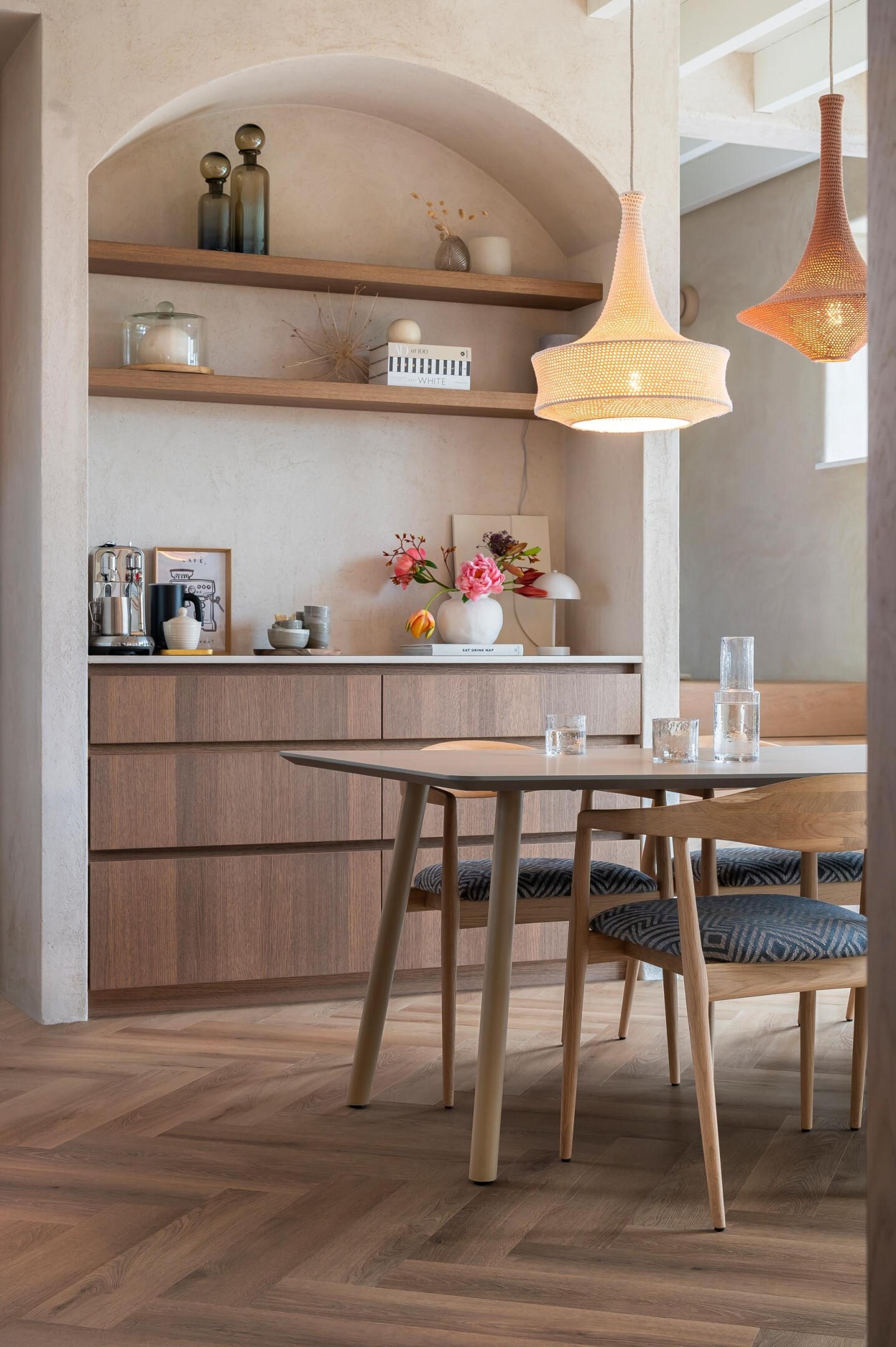
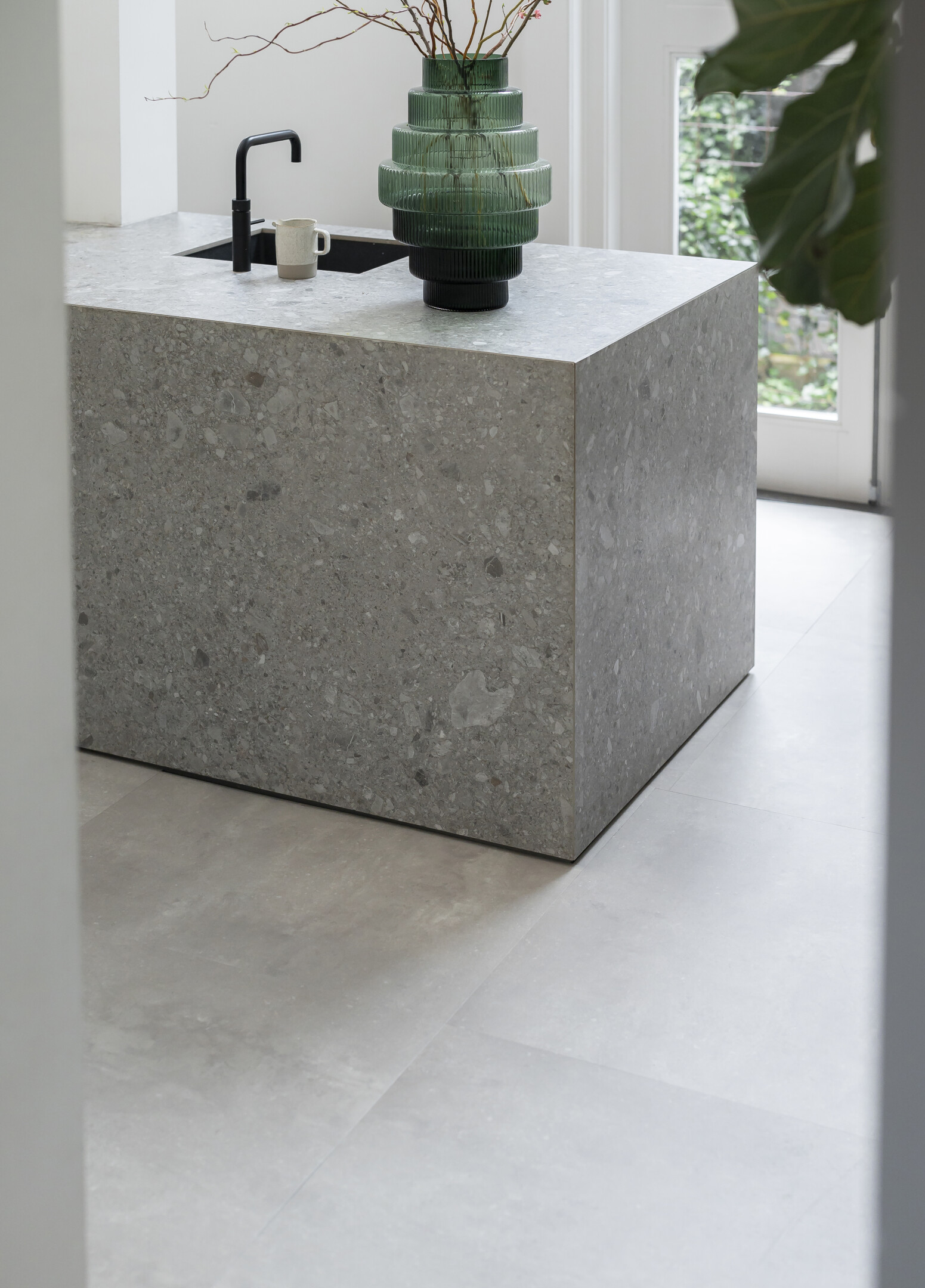
When both the floor and the kitchen are light, it creates a fresh, calm foundation. Daylight moves freely through the space. The kitchen feels larger and brighter, especially in homes with many windows or open-plan kitchens.
A light wood-look adds softness and a natural tone to the room, while a light concrete-look provides a calm, modern base. You can immediately see how the light plays across the surface, without harsh shadows or interruptions. For households seeking warmth without visual clutter, this often works beautifully.
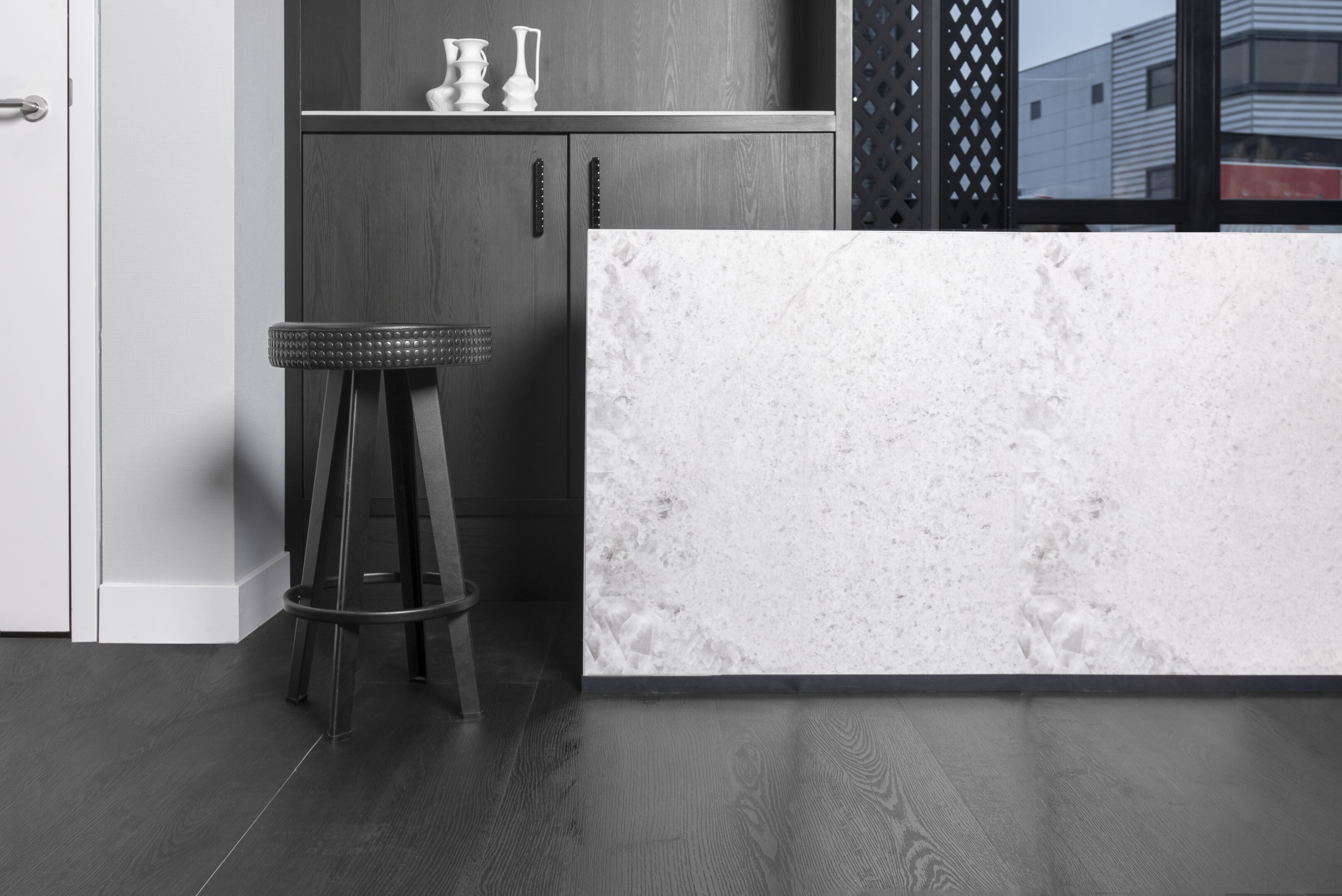
Option 4: Light kitchen with a dark floor
This combination immediately adds character. The kitchen gains an elegant foundation and stands out clearly in the space. The contrast between light and dark provides direction and structure. A dark floor makes the light kitchen feel warmer and less clinical.
A deep wood tone or a warm taupe concrete-look works especially well. The floor grounds the space, while the kitchen itself remains bright and inviting. The overall effect feels balanced, as if framing the kitchen.
Materials and textures: Wood look and concrete look
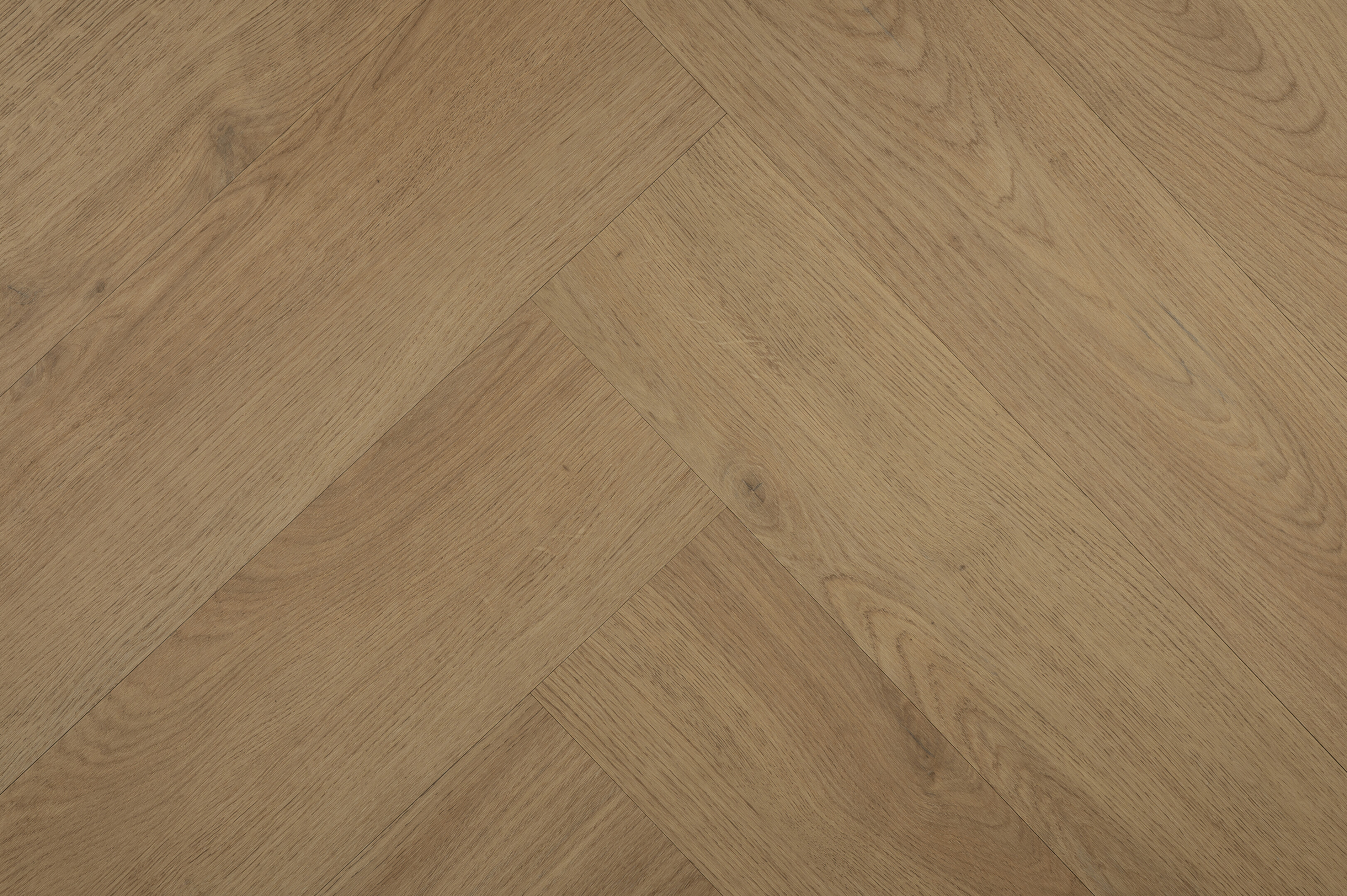
Wood look
Wood-look brings warmth. The grain subtly reacts to daylight, making the kitchen feel inviting. It works well in both light and dark kitchens. A light wood-look emphasizes calmness, while a dark wood-look adds depth.
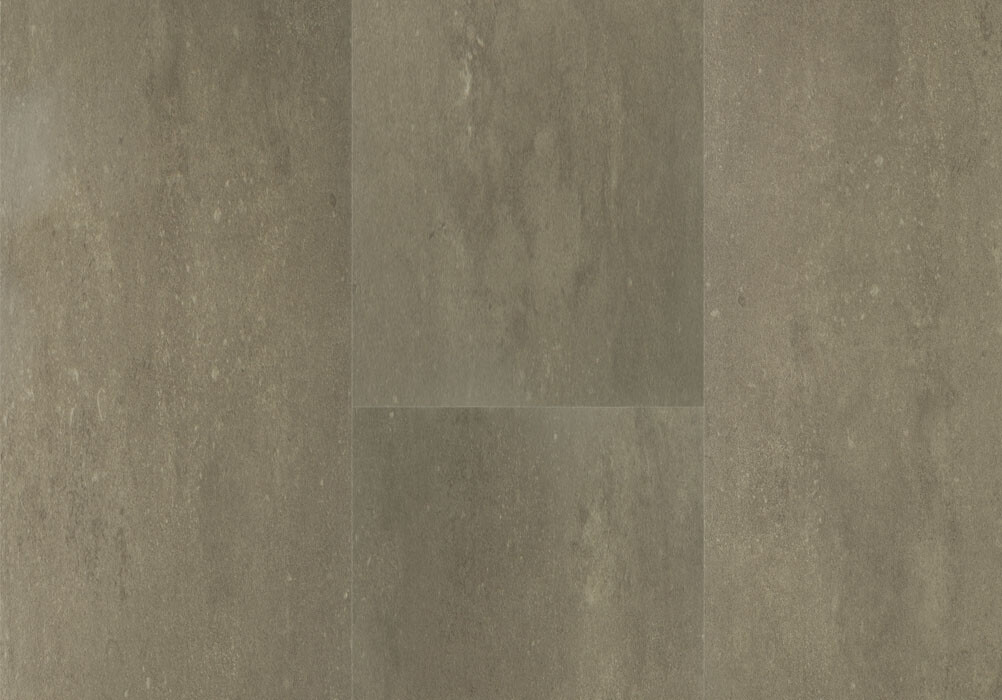
Concrete tiles look
Concrete-look provides a modern foundation. The matte finish softly reflects light, making the space feel sleek without being cold. In darker kitchens, a concrete-look adds a calm undertone, while in lighter kitchens it creates a bright, minimalist atmosphere.
Practical use: Maintenance, dirt, and scratches
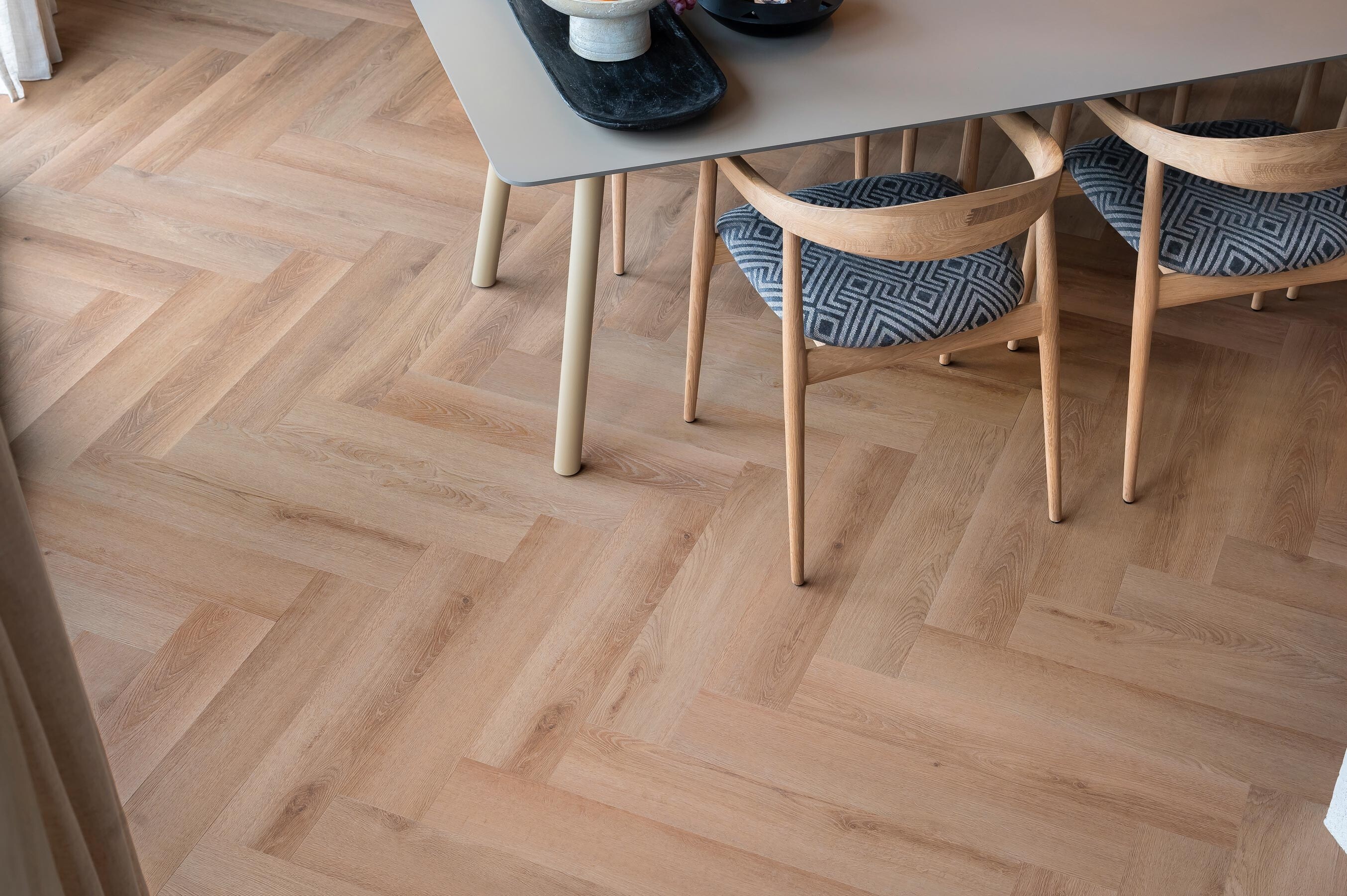
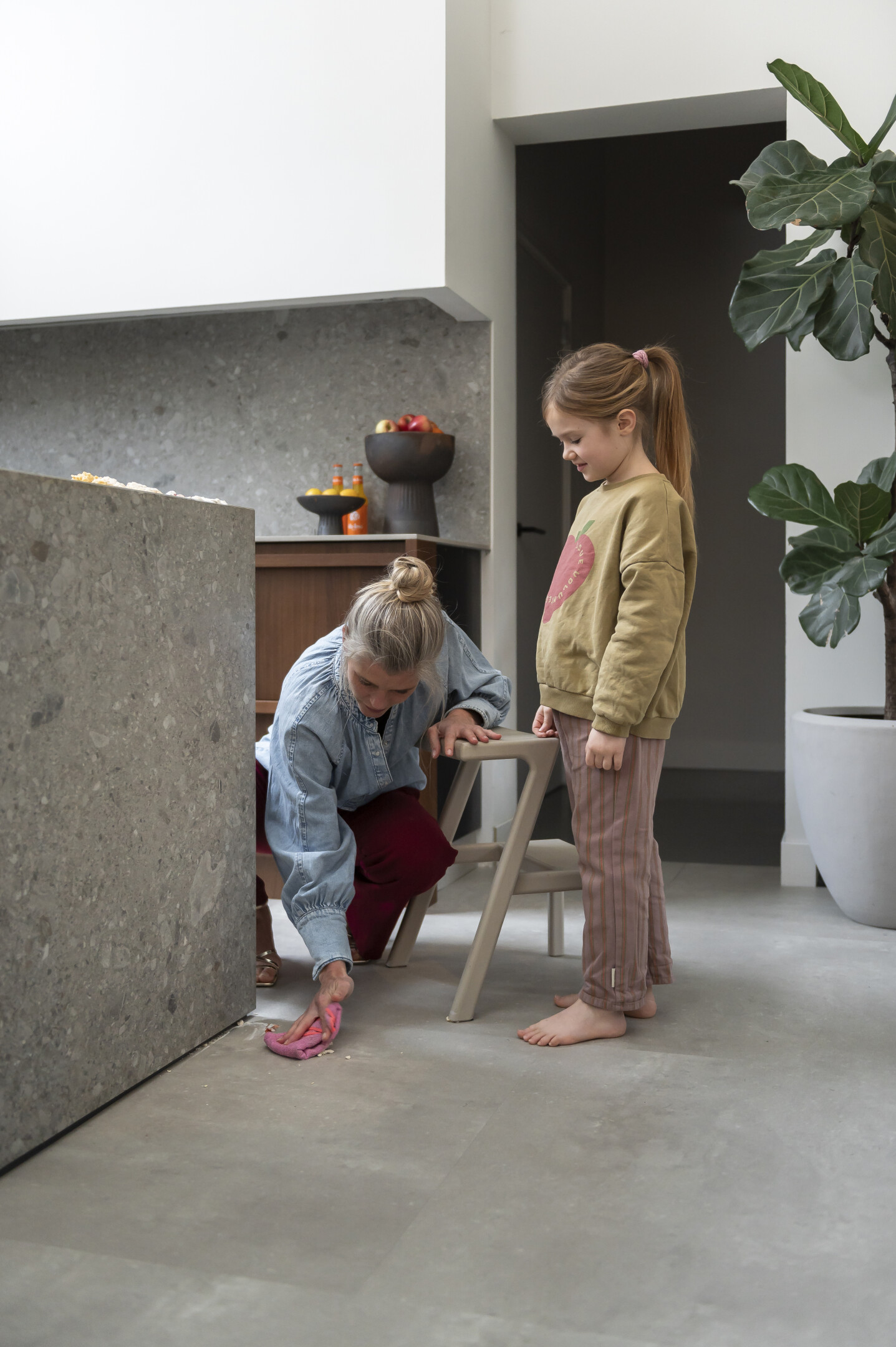
The kitchen is a high-traffic area. Dirt and moisture are present every day. A floor that’s easy to keep clean provides peace of mind. LVT is very convenient in this regard. The surface can be lightly wiped, and small splashes don’t soak in. On lighter floors, dust may be more noticeable, while darker floors can show minor scratches or streaks more easily.
It’s all about finding the right balance for your household. In a busy kitchen, a matte finish works well. Minor signs of use are less visible, and the floor maintains a calm, consistent appearance.

