

Staircase renovation with or without strips?
Take a look at the front edge of a renovated stair tread. On some staircases, you can see a separate trim strip beneath each tread. On others, the finish continues seamlessly without a visible break.
On a single step, that might seem like a small difference. But with fifteen steps in a row, that same line appears fifteen times. That is where you really see how choosing a staircase renovation with or without trim strips affects the look of the entire staircase.
What does a staircase renovation with trim strips look like?
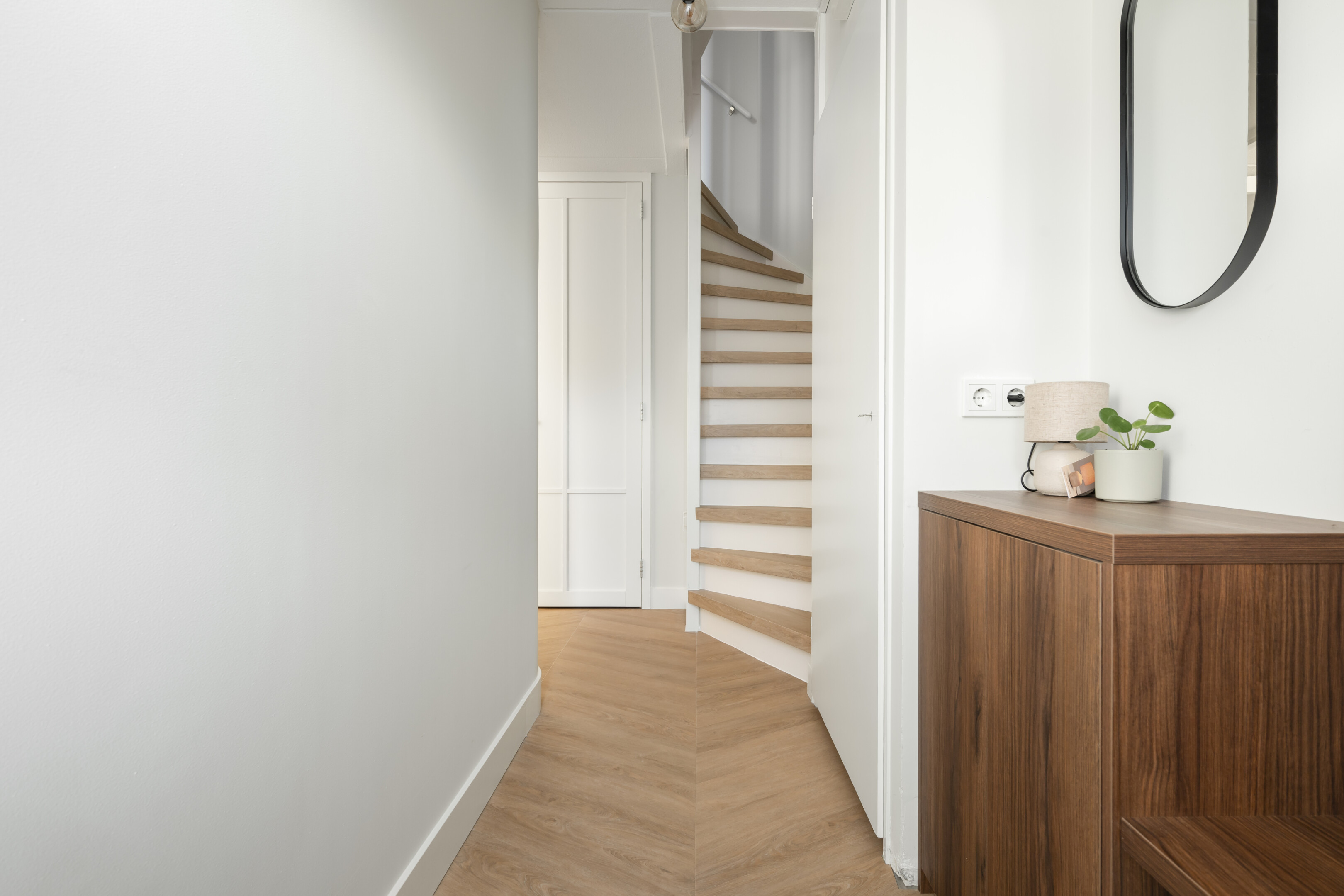
With a staircase renovation that uses trim strips, the edge of each stair tread is finished with a separate strip. When you look up the staircase from the hallway, you can see this edge on every step. This creates a series of horizontal lines that emphasize each individual step.
With a light wood look finish, for example, the trim strip beneath each step may remain visible. As a result, you see not only the staircase design but also exactly where each step ends.
What changes when you remove the trim strips?
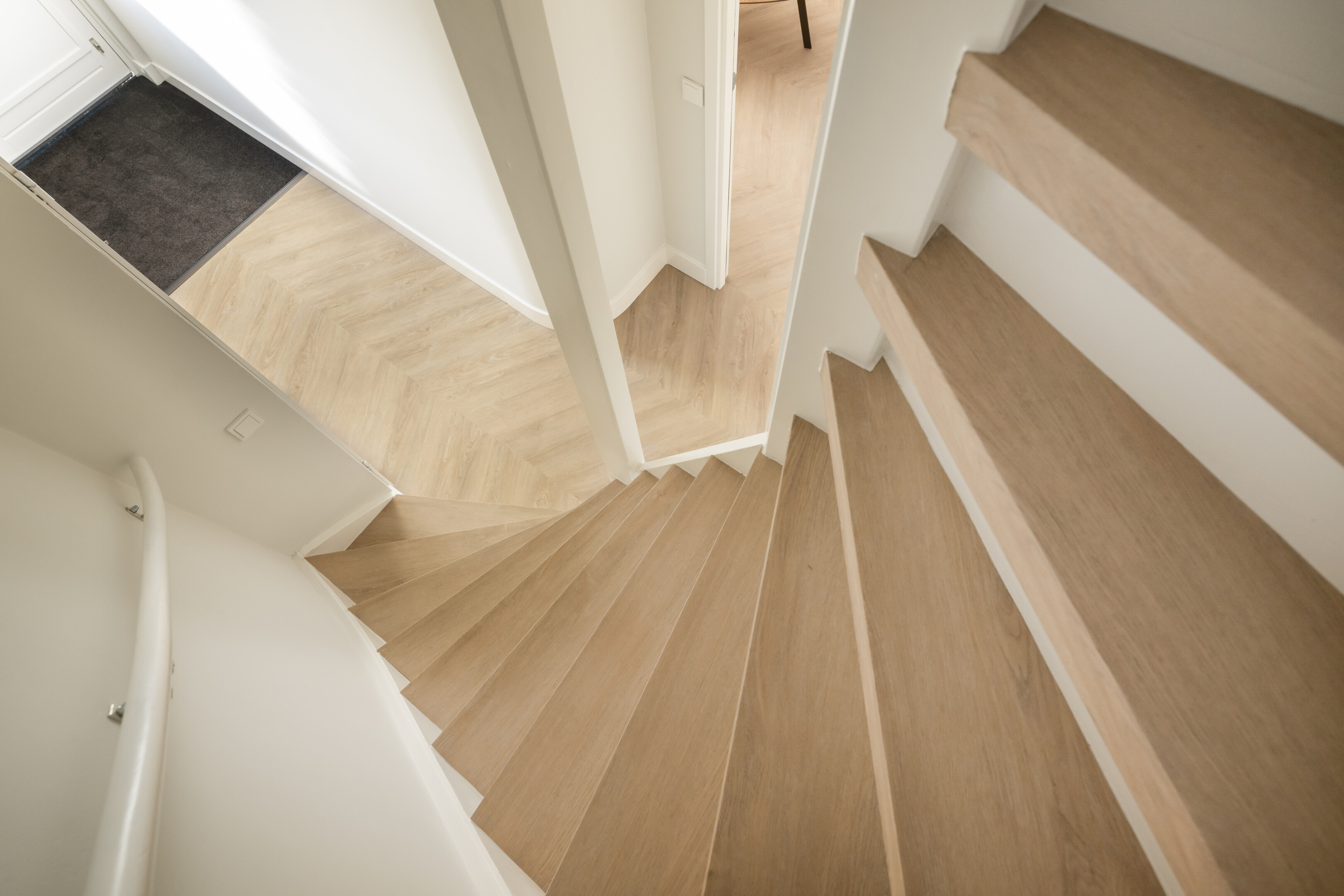
With a staircase renovation without trim strips, those separate lines disappear. When you look up the staircase from the bottom, your eyes are no longer interrupted by a separate edge on every step. This allows the color and design of the stair treads to stand out more, giving the staircase a more cohesive look.
This is especially noticeable with a wood look finish. The focus shifts to the wood grain and color of the stair treads rather than a series of individual trim strips.
The difference is in the front edge of the stair tread
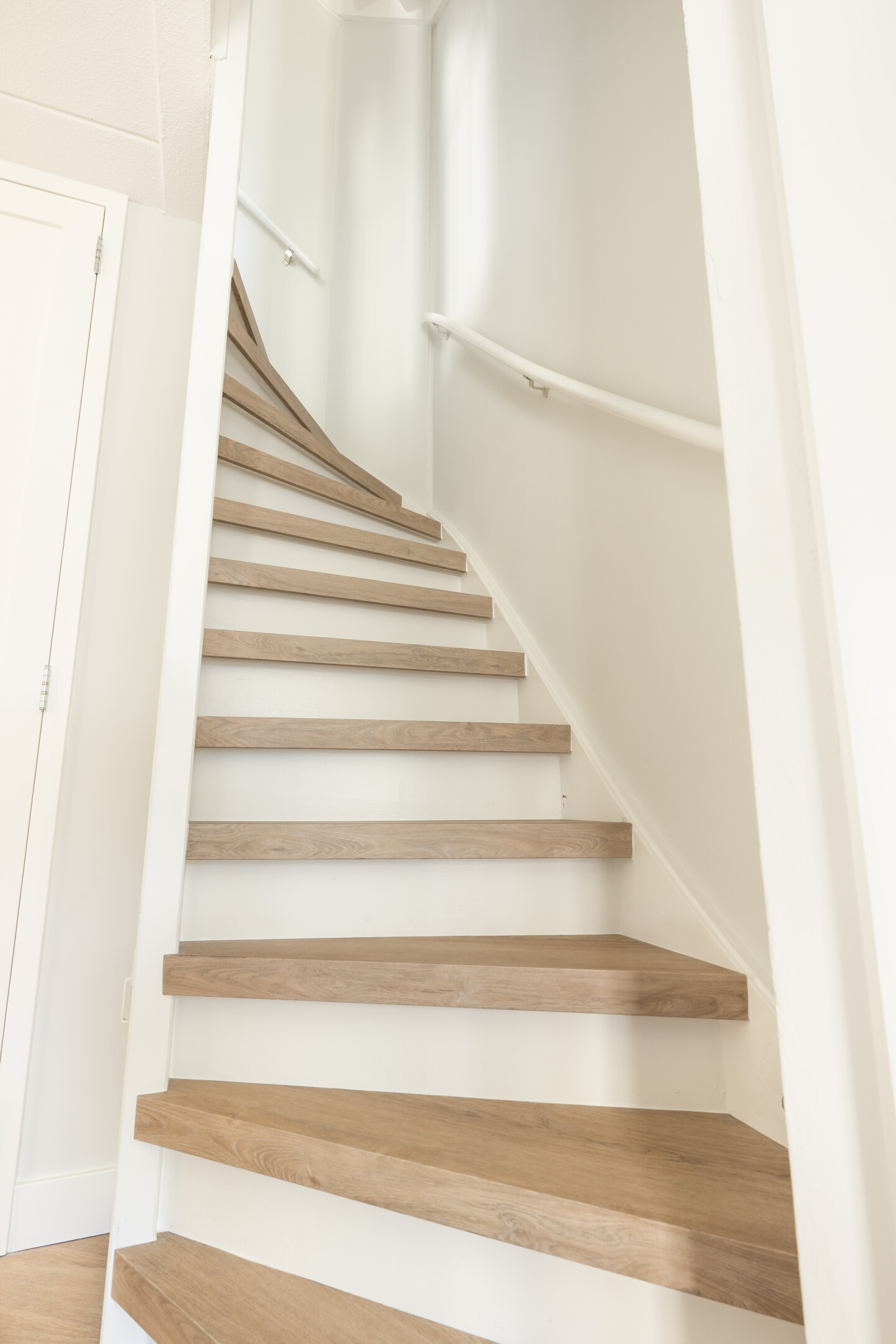
When choosing a staircase renovation, you will probably look at the color first. However, the front edge of each stair tread also plays a major role in the overall appearance.
Imagine looking directly at your staircase from the living room. With trim strips, you see a line beneath every step. Without trim strips, the surfaces of the stair treads themselves stand out more. It may seem like a small detail up close, but the difference becomes much more noticeable when you look at the entire staircase.
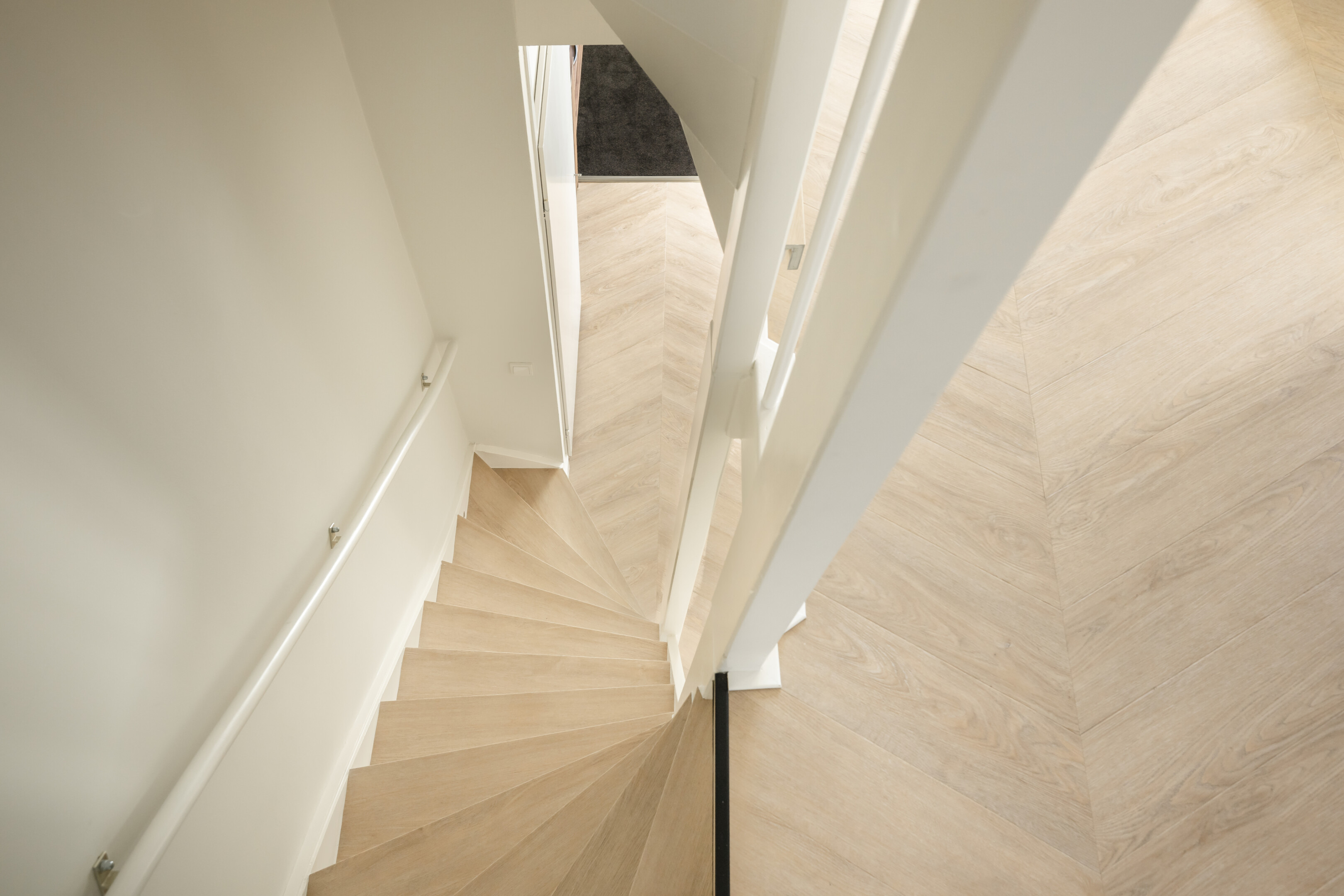
Also consider the transition from your flooring
Do you already have LVT flooring in your hallway or living room? Then the first step sits right next to that flooring. If your floor and staircase have a similar wood look, you want the materials to complement each other visually. Flooring consists of large, continuous surfaces. By keeping visible breaks on the staircase to a minimum, you can create a smoother, more seamless transition between the two.
That is why you should look beyond a single stair tread. Take a few steps back and consider the overall look of the flooring, the first step, and the rest of the staircase.
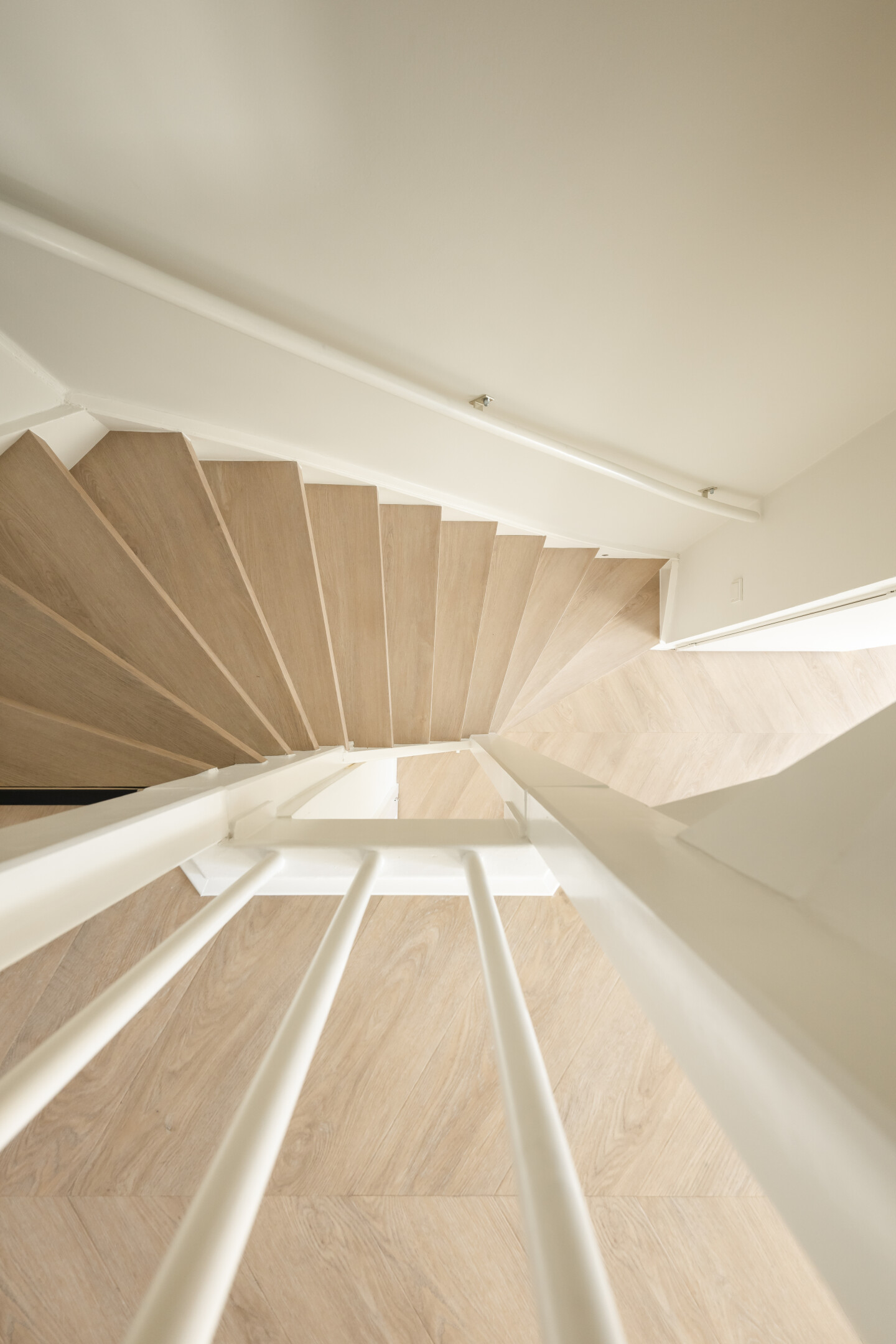
A staircase is used every day
Downstairs in the morning, back upstairs to grab something, and up to the bedroom again in the evening. The same steps are walked on every single day. That is why Hebeta’s stair renovation treads are wear resistant and easy to clean. Sand or dust on the steps? A quick vacuum or wipe is all it takes to keep your staircase looking neat. So it is not just about how your staircase looks when it is first installed, but also how well it holds up to everyday use.
Which staircase renovation is right for your home?
Want to see what a staircase without trim strips would look like in your favorite color or wood look? Get in touch to explore the options.