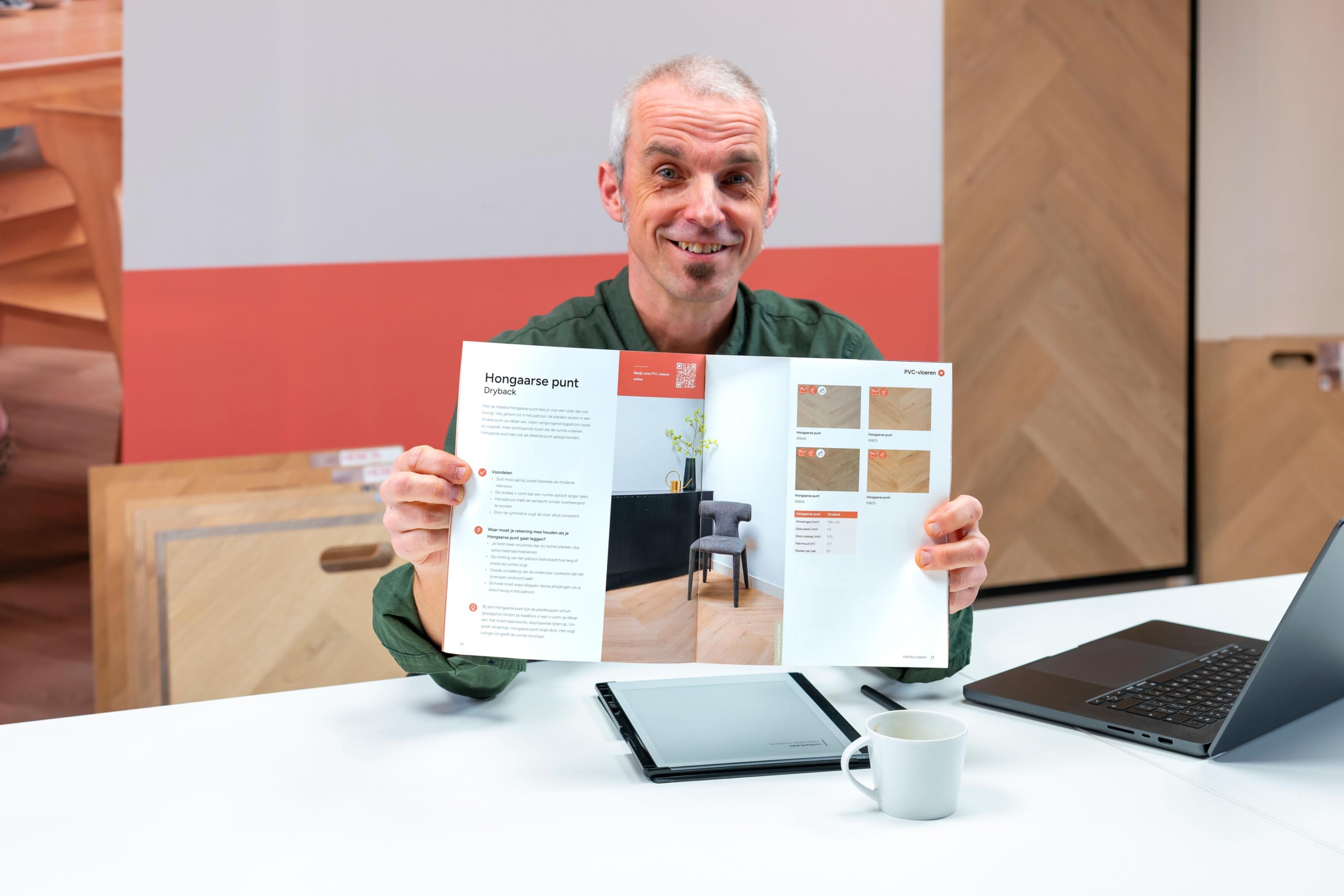


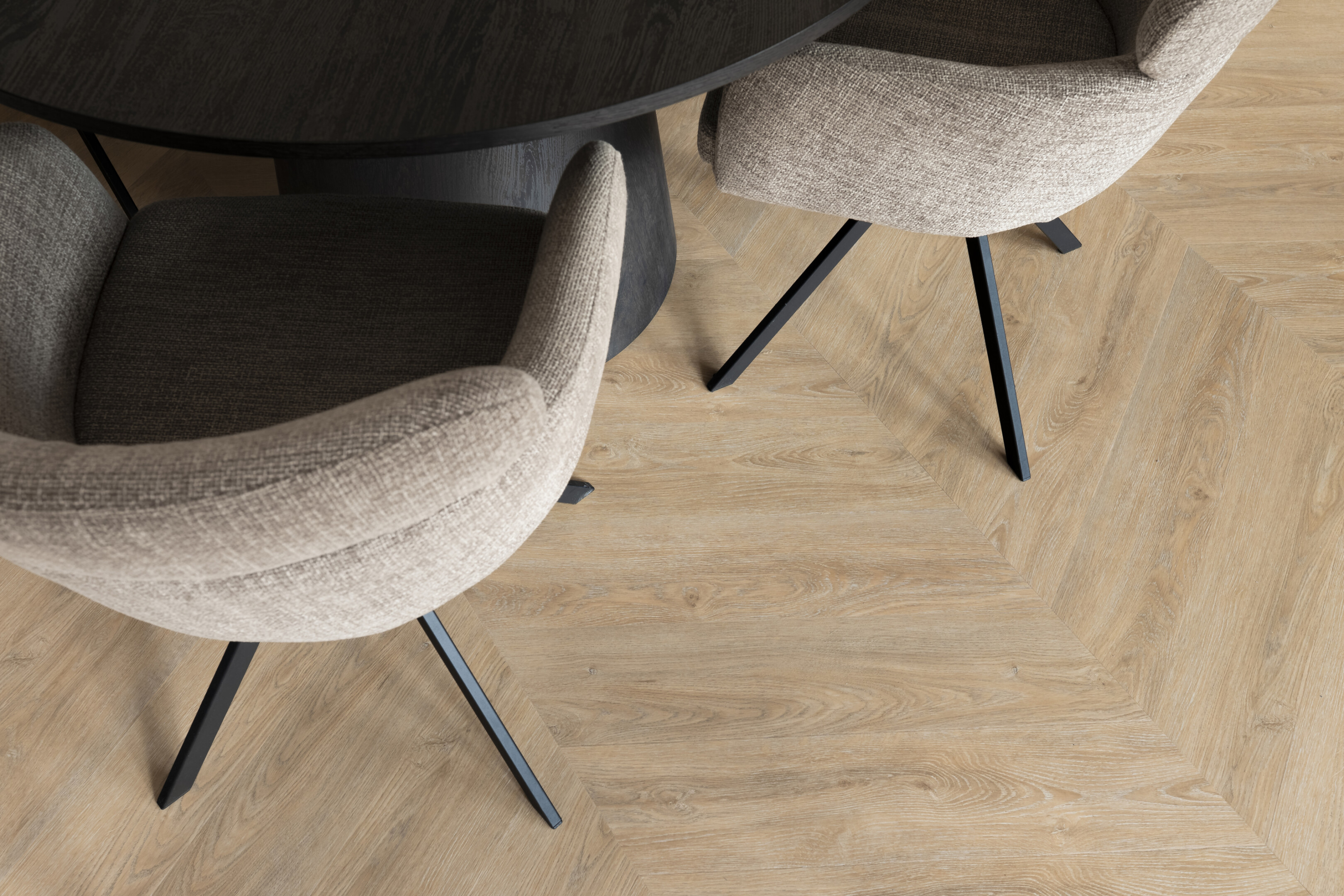
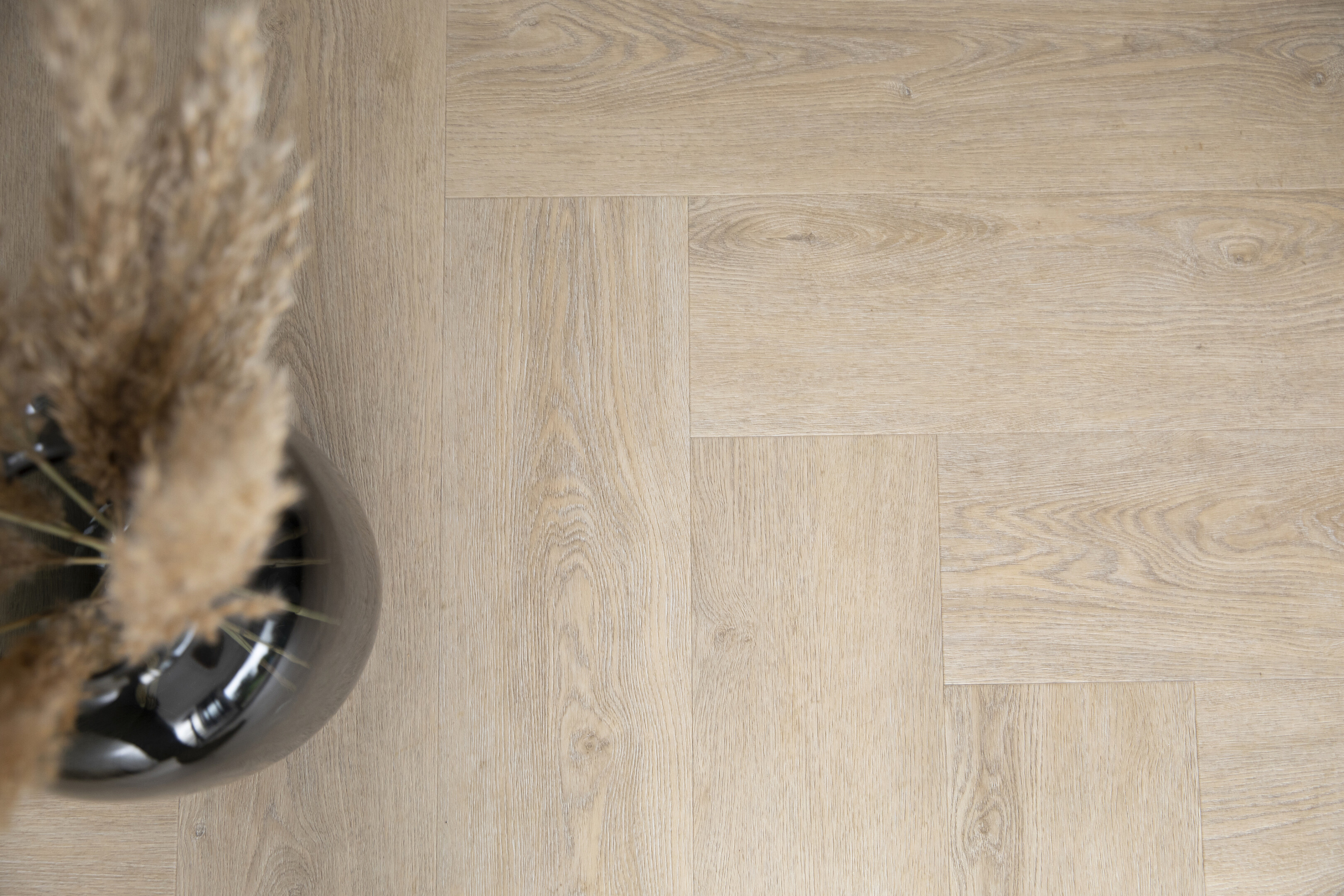
The difference between Hungarian Point and herringbone
At first glance, you’re looking at two patterns that are quite similar. Still, they create a different effect in an interior.
- With herringbone, the planks overlap, resulting in a more dynamic pattern. The floor shows more movement and draws attention more quickly to the installation itself.
- With the Hungarian point, the planks meet at a fixed angle. This creates cleaner lines and gives the overall look a calmer feel.
You notice that difference not just in the floor, but throughout the entire space. A herringbone floor adds more energy, while the Hungarian point brings more symmetry and often makes a room feel more balanced.
What does the Hungarian Point do to your space?
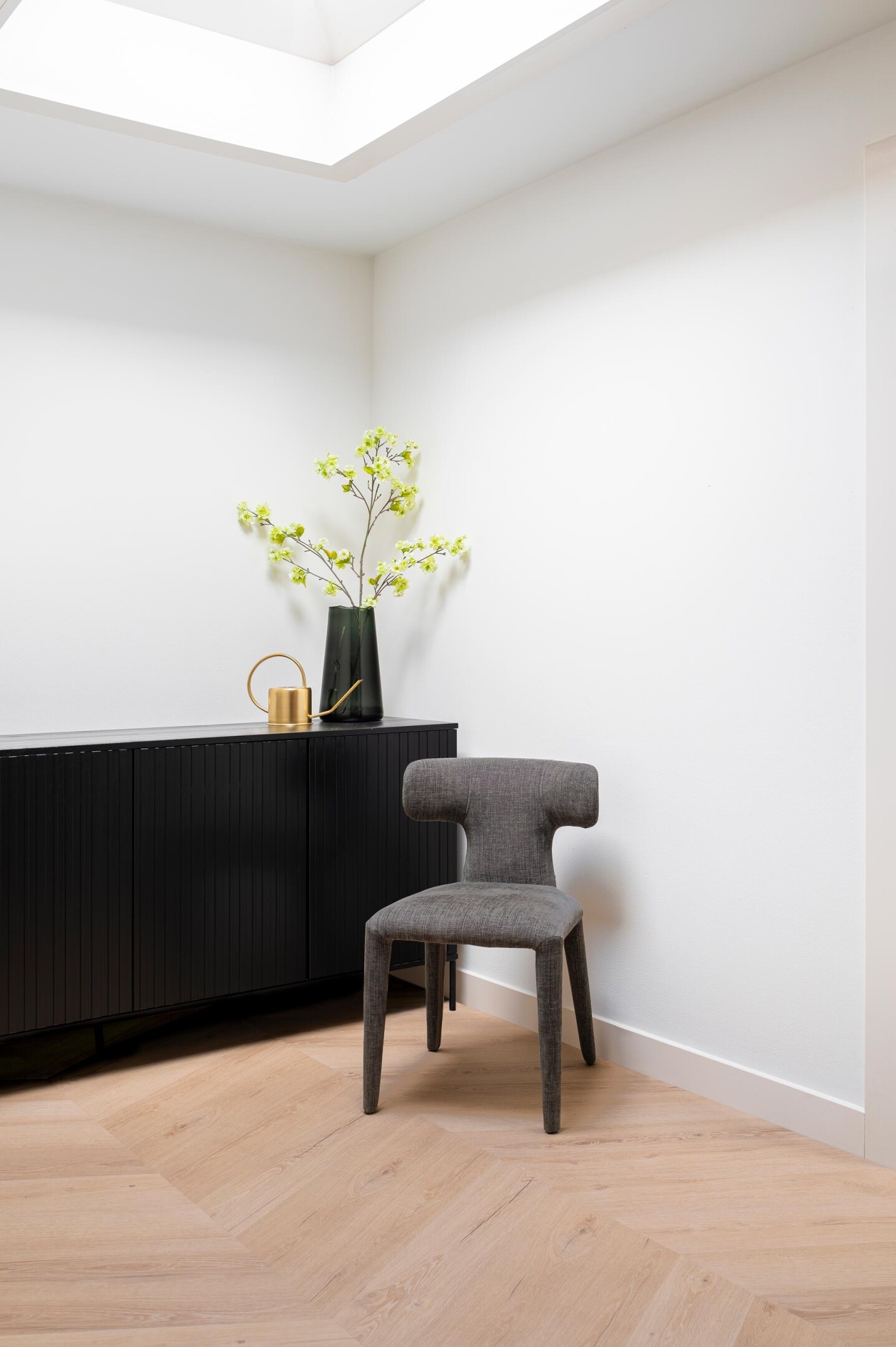
A floor pattern doesn’t just determine how a floor looks, but also how a space feels. With the Hungarian point, the lines naturally guide your eye, adding direction to the interior and making a room appear longer.
This works especially well in homes where sightlines matter. Think of a long living room, a room en suite, or a home with higher ceilings. The pattern enhances what’s already present in the space, adding structure without feeling harsh.
It can also work beautifully in a more modern interior. The clean lines create a sense of calm, while the warm look of LVT prevents the overall feel from becoming too cool.
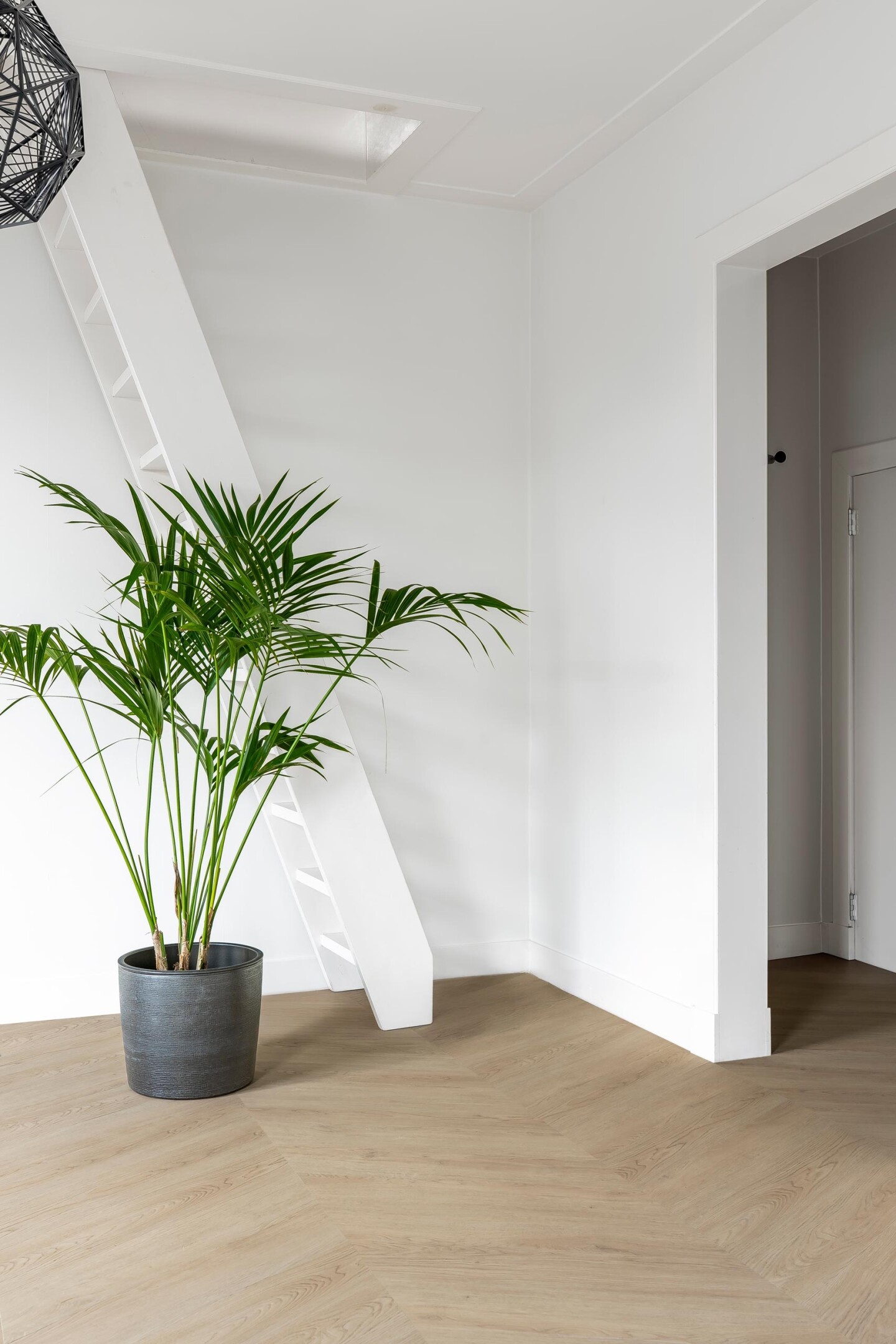
Does the Hungarian Point only suit a classic interior style?
The Hungarian point is often associated with homes that have character, but the pattern can also work beautifully in a modern interior. That’s because the lines remain clean and refined. The overall look isn’t defined by the pattern alone, but also by the color, the finish, and how the floor interacts with the rest of your interior.
A warm wood look softens the floor, while a matte finish keeps the overall feel calm. Combined with understated furniture and clean sightlines, this creates a floor that feels modern without becoming cold or impersonal.
How is Hebeta’s Hungarian Point collection structured?
The Hungarian point is a dedicated collection within Hebeta’s PVC flooring range. It is available as a dryback installation, meaning glue-down LVT. This ensures a clean, tight fit and allows the pattern to really stand out.
That’s especially important with a floor like this. The strength of the Hungarian point lies in its lines and symmetry. The more precisely the floor is installed, the calmer and more refined the overall look will be.
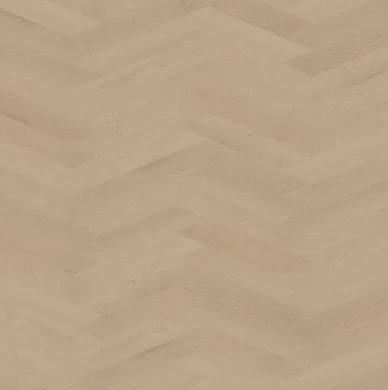
Also available in a Viennese Point pattern
Looking for something a little different? The same planks can also be installed in a Viennese point pattern. So it’s not a different collection, but simply a different installation method using the same flooring.
This gives you more flexibility in the final look. The Hungarian point often feels clean and calm, while the Viennese point adds a bit more detail to the pattern. The difference is subtle in structure, but the effect in the space can be noticeably different.
Why it’s best to see this pattern in person
With a pattern like the Hungarian point, a single product photo doesn’t tell the whole story. The way light falls, the length of the room, and how it interacts with furniture and wall colors all influence how the floor is perceived. That’s exactly why it helps to see this pattern in person.